
Industry leaders, including Mahindra Group chairman Anand Mahindra, RPG Enterprises chairman Harsh Goenka and Biocon Ltd chairperson Kiran Mazumdar-Shaw on Monday came out in support of the Agnipath scheme, saying it has large potential for employment of youth in the corporate sector. Mahindra also expressed dismay over the violence against the scheme while asserting that the farm equipment to aerospace conglomerate welcomes the opportunity to recruit trained, capable and young people under the programme. The Agnipath scheme, announced on June 14, provides for the recruitment of youths between the age bracket of 17-and-half years to 21 for only four years with a provision to retain 25 per cent of them for 15 more years.

Have a Plan B in place if the tide turns against you.
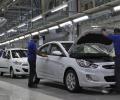
Leading carmakers Maruti Suzuki, Hyundai and Tata Motors reported robust dispatches to dealers in May on the back of strong demand for passenger vehicles across regions, even as the global semiconductor shortage continued to impact production. Mahindra & Mahindra, Kia India, Toyota Kirloskar Motor, Honda Cars and Skoda also witnessed strong demand for their models last month. The month of May also witnessed Tata Motors race ahead of Hyundai in terms of domestic wholesales.

Market leader Maruti Suzuki India's passenger vehicles sales declined by 2.34 per cent last month at 133,702 units. Hero MotoCorp reported total two-wheeler sales of 480,196 units last month, down 20.05 per cent.

Besides electric vehicles, some start-ups present are working in the area of bike customisation, motorsports, auto gaming arena, autonomous vehicle and so on
Two-wheeler exports from India fell by 17.8 per cent to 3.65 million units in 2022-23 (FY23), according to data released by the Society of Indian Automobile Manufacturers (Siam) on Thursday. This decline is due to a rise in global inflation and the weakening of economies and currencies in key export markets of Africa, Latin America (LatAm), and South Asia. In contrast to FY23, two-wheeler exports from India jumped 35.4 per cent to 4.44 million units in 2021-22 (FY22).

Auto stocks led the rally with Tata Motors, Hero MotoCorp and Maruti Suzuki leading the gains.

The National Stock Exchange (NSE) Nifty Next 50 Index could undergo large-scale changes if the proposed tweaks to its computation methodology get implemented. In a discussion paper floated recently, NSE Indices, which owns and manages a portfolio of over 350 indices under the Nifty brand, proposed that only stocks that are traded in the futures and options (F&O) segment can be part of the index. Currently, as many as 11 non-F&O stocks are part of the Nifty Next 50 Index, which, as the name suggests, represents the next rung of large and liquid securities after the Nifty50.

Honda Motorcycle and Scooter India (HMSI), India's second-largest two-wheeler maker, on Wednesday revealed its electric vehicle (EV) roadmap, which includes setting up a dedicated EV factory, launching the first two EVs in 2023-24, and establishing 6,000 battery exchange points in the country. HMSI plans to establish a specialised unit for the manufacturing of electric vehicles (EVs), named 'Factory E', at its Narsapura plant located in Karnataka. Factory E will be created by converting an existing production line that currently manufactures internal combustion engine (ICE) vehicles, said Atsushi Ogata, HMSI managing director and chief executive officer.
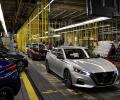
Auto sales in April have started showing the impact of lockdowns that has put the brakes on the recovery of the sector, a report said on Tuesday. With more states announcing lockdowns and some more OEMs expecting to go for maintenance shutdowns, as many as 50 per cent of the dealers are likely to be impacted by the move, it added. However, the full-year prospects remain positive if the COVID wave recedes in the April quarter and the vaccination drive goes as planned, brokerage firm Centrum said in the report.

Can Bhavish Aggarwal upend the electric two-wheeler market, which is now overwhelmingly in favour of scooters?

Passenger vehicle wholesales in India rose by 14.16 per cent in August to 2,15,916 units, driven by pent-up demand, industry body SIAM said on Friday. According to the latest data by the Society of Indian Automobile Manufacturers, passenger vehicle wholesales stood at 1,89,129 units in the same month last year.
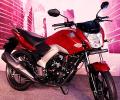
How does Honda CB Unicorn 160 fare against its rivals? MotorOctane.com weighs in.

At Prestige Polygon Towers in Chennai's Teynampet, hectic preparations are on for a mega global investors' meet under the aegis of Guidance Tamil Nadu (the state investment promotion agency) scheduled for January 2024. Asked about the key focus areas of the meet, the agency's managing director and chief executive officer, V Vishnu, said the state was betting big on electric mobility. This is no surprise, given that the state has signed electric vehicle (EV)-related memorandums of understanding (MoUs) with several companies in the recent past that may bring in investments worth around Rs 33,000 crore with the potential to create over 43,000 job opportunities.

The country's largest carmaker Maruti Suzuki India (MSI) on Monday reported a 11.8 per cent increase in wholesales to 164,469 units in February. The company had sold 147,110 units in February last year, Maruti Suzuki India (MSI) said in a statement. Domestic sales increased 11.8 per cent to 1,52,983 units last month, as against 1,36,849 units in February 2020, it added.

Reflecting the woes of the Indian automobile industry, the country's car exports remained flat at 550,466 units in 2013-14, during which domestic sales fell for the second consecutive year.
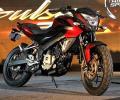
Companies like Yamaha Motor India, Honda Motorcycle and Scooter India, Suzuki Motorcycle India and TVS Motors are all geared up to launch bikes to shake-up Bajaj's stronghold -- the 150-250-cc segment

The most important positive of India's stealth bull market is earnings growth across different sectors, explains Debashis Basu.

A single application and a plethora of services for passenger cars - that is what myTVS, a brand that operates under Ki Mobility Solutions and is part of the TVS family, is set to bring to customers, in a bid to disrupt the concept of "super apps" in India. Starting July 15, myTVS will launch its connected car platform or super app called myTVS Life360 for aftermarket passenger cars. Through it, customers will be able to avail themselves of a range of services like maintenance, diagnostics, roadside assistance, accessories, payments, insurance, and so on.

These bikes were all the craze on Day 1 of Auto Expo 2018's media exclusive.
Industry representatives have said from the second half of the year, they hope to see revival because the rural economy is looking up and the projects the government has announced.

Passenger vehicle sales continue to drop in June; Maruti, Hyundai, Tata Motors, Toyota witness decline. Mahindra & Mahindra, however, reported a 4 per cent growth.

New launches as well as upgrades to existing scooter models marked this year as manufacturers competed with each other to satiate the demand for new and interesting automatic scooters.

Vehicle prices have gone up as manufacturers gear up for the transition to stricter emission norm BS-VI from BS-IV beginning April 1.

Copparam Shreyas Hareesh, a 13-year-old prodigy from Bengaluru, succumbed to injuries that he had suffered following a crash in the third round of the MRF MMSC FMSCI Indian National Motorcycle Racing Championship.

Prices of all metals - from steel to copper, aluminium, zinc and lead - have shot up by about 5-11 per cent in the past month. Commodity inflation is raising its head, forcing companies to consider price hikes.

These five vehicles are the most popular two-wheelers launched till date in 2016. However, 2016 is still on and we are expecting lot more exciting vehicle launches around the festive season.

The $100-billion SAIC would have a dedicated manufacturing facility in India, and would be the first Chinese automaker to do so.

This is a good opportunity for long-term investors to pick quality small and midcap stocks at reasonable valuations.

The auto industry has had a mixed month. The build up to Dhanteras and Diwali was good but the demand tapered off subsequently.

In a rare face off, captains of the auto industry have hit out at the government for not walking the talk. At an industry event in the capital on Wednesday, R C Bhargava, chairman of India's largest carmaker Maruti Suzuki, and Venu Srinivasan, chairman of TVS Motor, questioned the government's intent to support the auto sector. Revenue secretary Tarun Bajaj sat in the audience listening, before his turn came to counter them.

To be able to tide over the current crisis, automobile manufacturers have waged a war against all cost heads.
Leading automakers Maruti Suzuki India, Hyundai Motor, Kia Motors and Tata Motors reported sales growth in the domestic market in November, aided by robust offtakes amid the festival season. While Maruti Suzuki India reported marginal growth, Hyundai logged in its highest ever monthly sales in November. Others like Honda Cars India, Toyota Kirloskar Motor, Mahindra & Mahindra and MG Motor India also reported sales growth in November as compared with the same month last year.
Broader markets underperformed indices with BSE Midcap down 0.43% while the Smallcap index fell 0.07%.

For a change, glamour goes rural as exhibitors glam up their products meant for India's villages.

In a bid to strengthen their bilateral economic ties, India and Indonesia plan to explore opportunities for co-operation in oil and gas, and railway sectors, among other areas.

Passenger vehicle wholesales in India increased by 17 per cent in the second quarter of the current fiscal year as buying sentiment improved and companies stocked up to cater to enhanced demand in the festive season, auto industry body SIAM said on Friday. According to the latest data by the Society of Indian Automobile Manufacturers (SIAM), passenger vehicles sales in the July-September quarter increased to 726,232 units from 620,620 units in the same period last year. Similarly, two-wheeler sales during the September quarter this fiscal rose marginally to 46,90,565 units as compared with 46,82,571 units in the same period last fiscal. However, commercial vehicles sales saw a dip of 20.13 per cent at 133,524 units in the quarter under review as compared with 167,173 units in July-September 2019.

The Sensex closed the day at 28,141, up 486 points, while Nifty50 settled at 8,716, up 155 points.

Leading automakers Maruti Suzuki, Hyundai and Tata Motors on Thursday reported robust sales in March as a shift towards personal mobility and pent up demand continued to help companies push dispatches to their respective retail partners. Toyota Kirloskar Motor, Honda Cars and Mahindra and Mahindra (M&M) also reported strong sales last month as compared to the year-ago period, when dispatches were adversely impacted due to the impending transition to BSVI from April 2020 and the nationwide lockdown to contain the coronavirus pandemic. The country's largest carmaker Maruti Suzuki India said its domestic sales stood at 1,49,518 units last month. The auto major had reported sales of 76,976 units in March 2020.

A series of flip-flop on policies and a non-existent charging infrastructure are the biggest challenge in achieving the target of selling 6-7 million hybrid and electric vehicles by 2020.
